Bakki infrastructure
Infrastructure and resources
Renewable and scalable energy
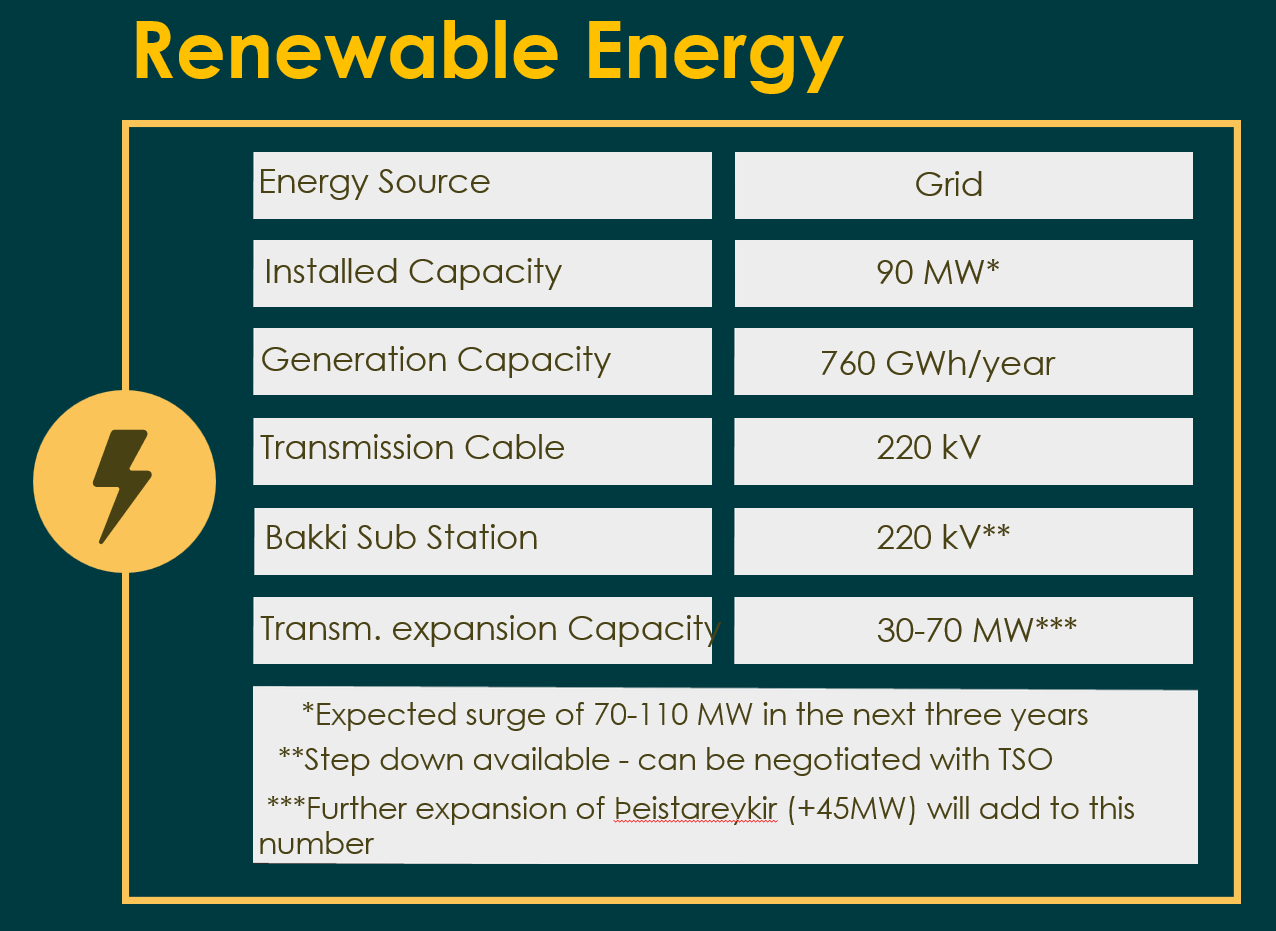
Bakki Industrial Park is powered by one of the most robust renewable energy ecosystems in Iceland. The area benefits from exceptional access to geothermal and hydropower resources, creating a stable, low carbon, and scalable energy foundation for current and future industries.
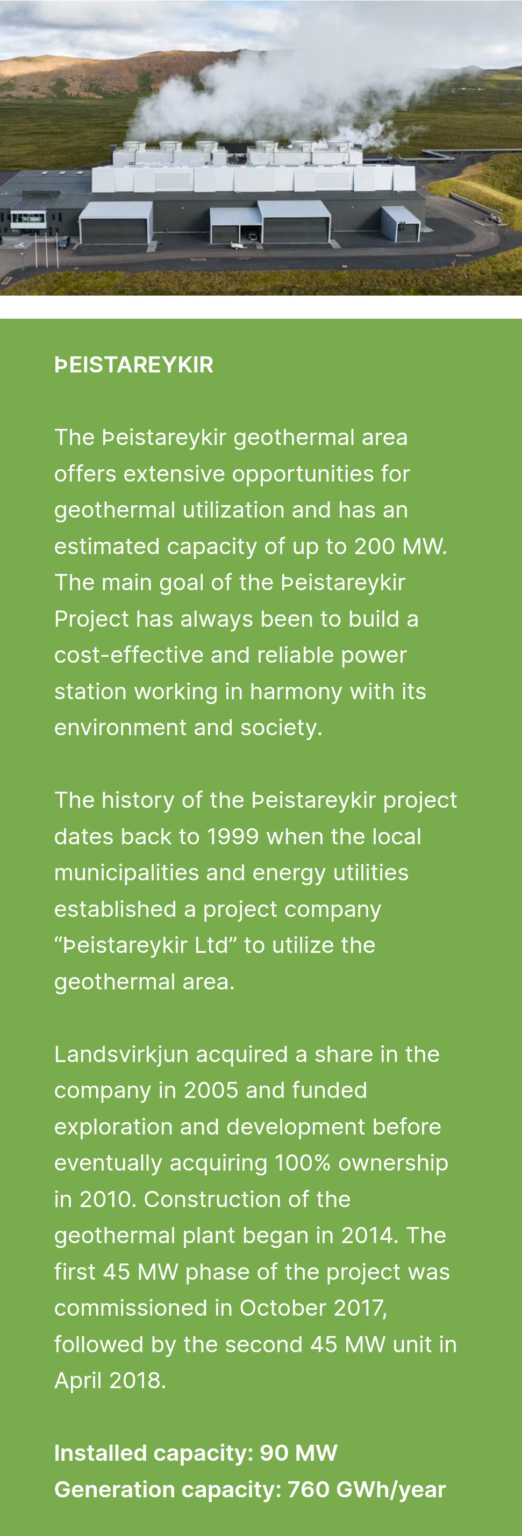
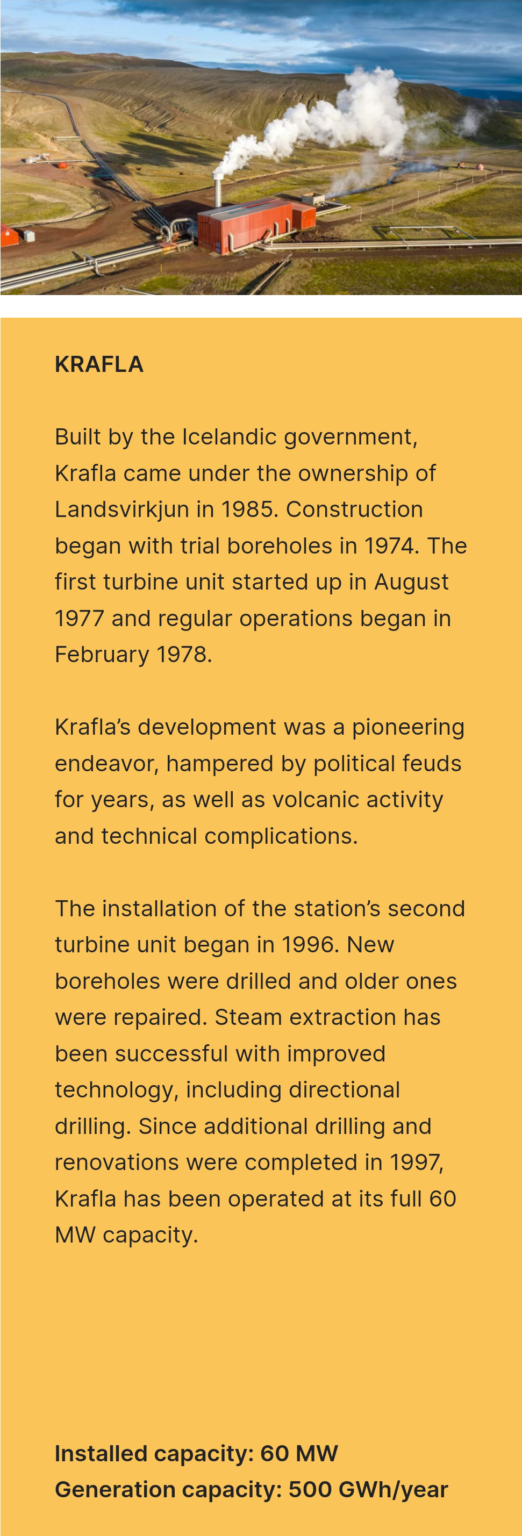
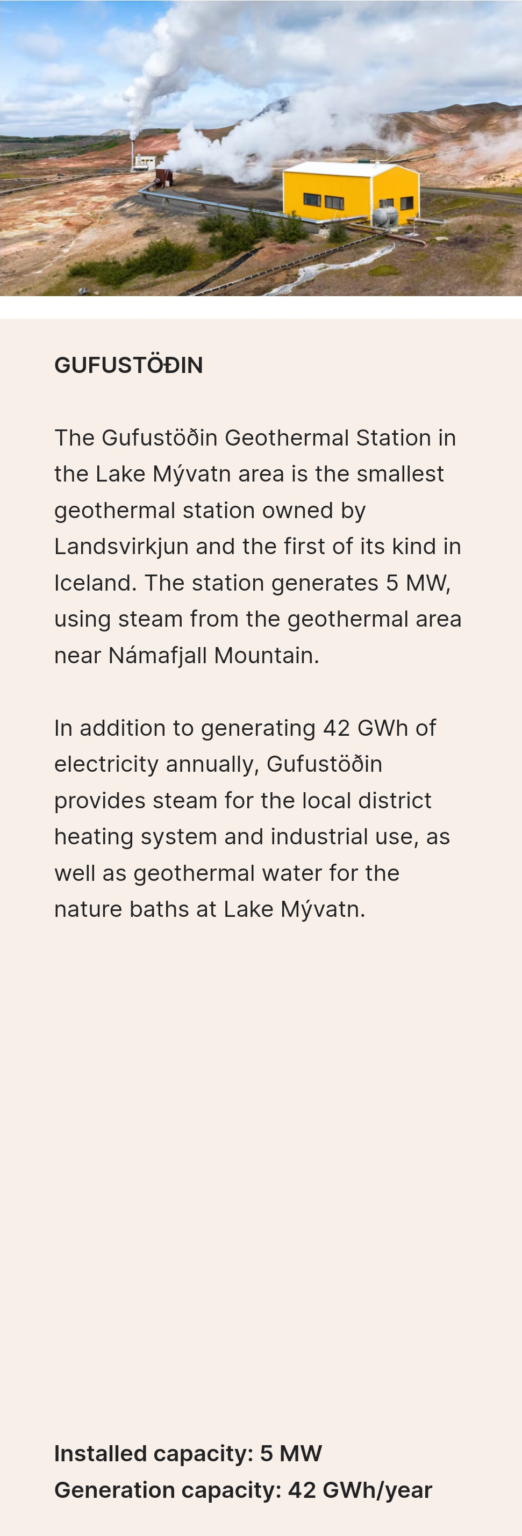
Þeistareykir Geothermal Power Station, as well as geothermal plants at Krafla and Bjarnarflag, are in close proximity to Bakki Industrial Park. This cluster of geothermal stations, run by Landsvirkjun, ensures a steady baseload of clean, renewable electricity year round.
In addition, Bakki is linked directly to Iceland’s high voltage transmission system through a Landsnet substation, enabling reliable energy delivery for large scale industrial operations and connecting the industrial park to other energy producers in Iceland.
Current Capacity and Expected Growth
Today, the energy resources serving Bakki amount to ~100 MW of renewable generation capacity. This existing capacity is already sufficient to support demanding industrial operations such as silicon metal production, data centers, and advanced material processing.
In the coming years substantial investment is expected to boost geothermal capacity in North Iceland. The region is expected to see a 70–110 MW increase in available power over the next five years, raising the total to approximately ~200 MW. The more long term plan in other energy production options in the region, including wind, could add another 100 MW putting the total to approximately ~300 MW in 2035. These expansions strengthens Bakki’s long term competitiveness and ensures room for new, energy intensive industries to grow.
This planned expansion aligns with Iceland’s national strategy to scale up renewable energy utilization and support a greener, more circular industrial economy.
Power transmission
Landsnet, Iceland's national transmission system operator, currently has a sub station in Bakki, capable with modification to deliver ~100 MW.
Landsnet plans to strengthen the energy infrastructure at Bakki by adding a new transmission line and substation in 2029. This upgrade is expected to increase the area’s power‑transport capacity by an additional 150–250 MW, significantly enhancing Bakki’s ability to support new and expanding industries.
Geothermal high temperature water
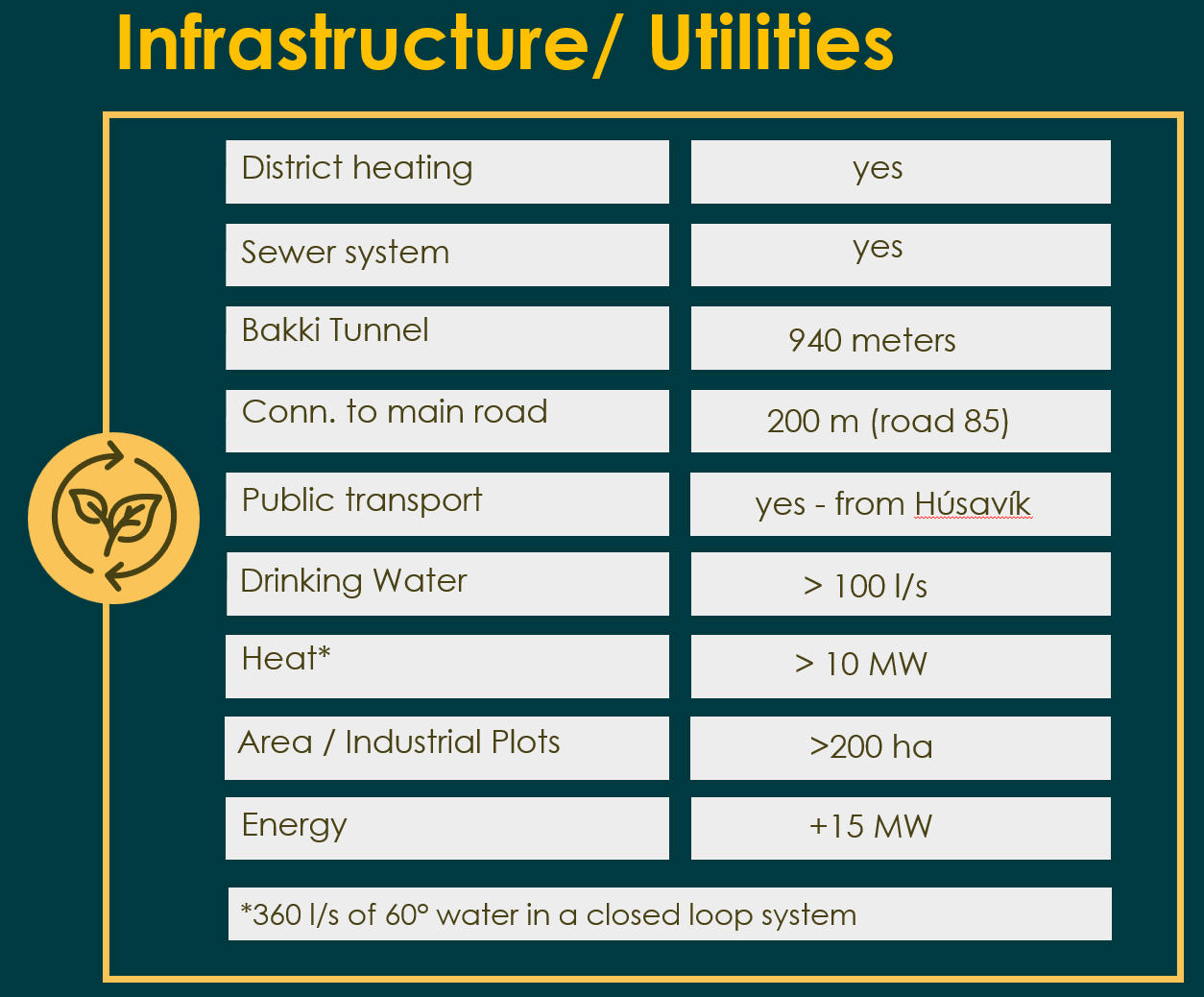
Bakki Industrial Park is uniquely positioned near some of Iceland’s most powerful high‑temperature geothermal systems, giving companies exceptional access to both geothermal heat and large volumes of fresh cold water for industrial use. This combination offers a rare and valuable resource base for energy‑intensive and water‑reliant industries.
High‑Temperature Geothermal Systems
The Bakki area benefits from close proximity to major geothermal fields capable of delivering high‑enthalpy water and steam, ideal not only for electricity generation but also for a wide range of direct‑use industrial applications. Industries that require heat—such as drying, processing, thermal conditioning, or chemical/biological operations—can significantly reduce operational costs through the use of geothermal heat.
Two Geothermal Sources Serving Bakki
Hveravellir – 120°C Geothermal Water
The Hveravellir geothermal area provides water at approximately 120°C, with an existing pipeline already connected to Húsavík. This supply is well‑suited for district heating, industrial heat applications, and processes that rely on stable, medium‑to‑high‑temperature water.
Þeistareykir – 150°C High‑Enthalpy Steam and Water
Þeistareykir delivers high‑temperature geothermal resources, reaching up to 280°C. A dedicated pipeline to Bakki is currently in under consideration, opening significant new opportunities for industries that require hot water or steam for advanced thermal processes. Depending on demand and other factors, the pipeline could become operational around 2031.
Cold water
In addition to geothermal heat, Bakki has access to large quantities of clean, fresh cold water, an essential resource for industries such as food processing, aquaculture, cooling‑intensive technologies, and data centers. This reliable cold‑water supply adds a critical layer of flexibility for companies whose operations depend on both thermal and non‑thermal water use.
Deep sea harbor
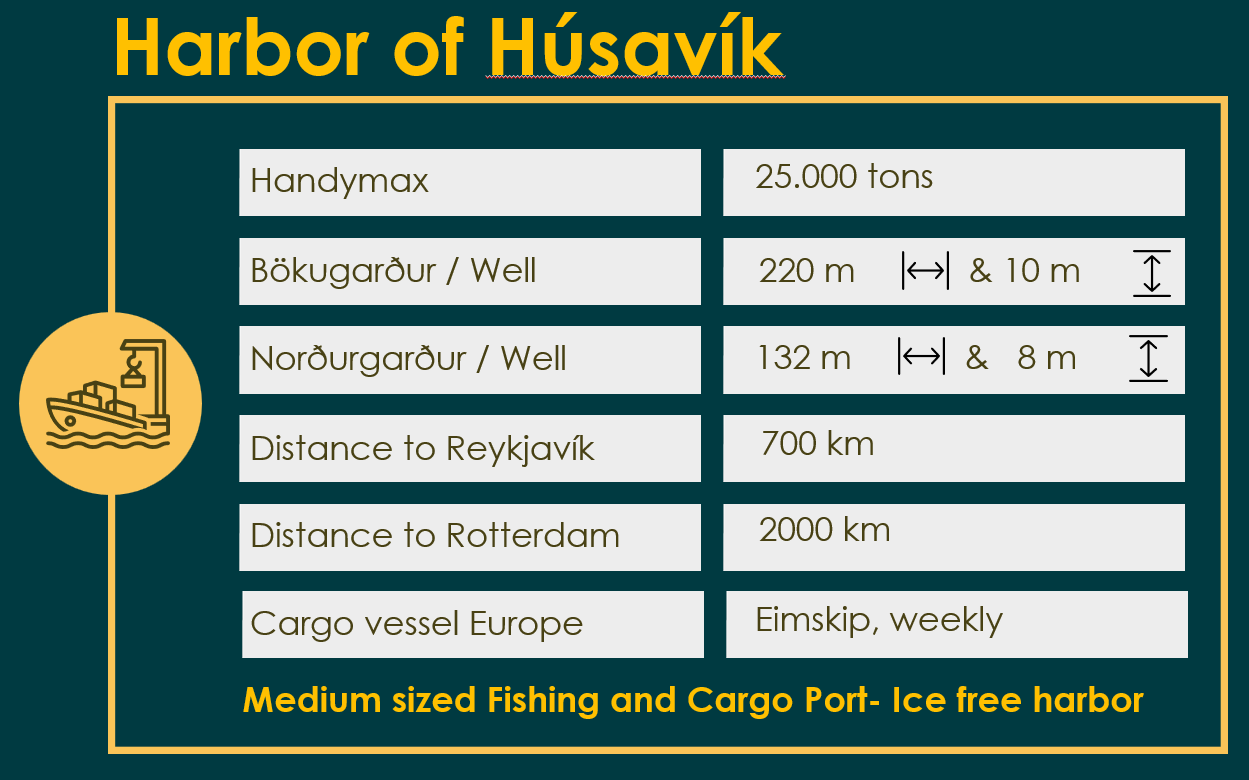
Húsavík’s deep‑sea harbor plays a central logistical role for industries operating in North Iceland, offering a reliable maritime gateway for heavy transport and international shipping. The harbor is 220 meters in length and 10 meters deep.
Its strategic location, combined with modern infrastructure, makes it a natural hub for expanding industrial activity at Bakki.
Húsavík harbor has long been an important industrial asset for the region. It provides deep‑water access suitable for large vessels and offers efficient connections to industries operating inland. As part of the development of the Bakki Industrial Park, the harbor was integrated into the area’s logistics network through purpose‑built industrial routes, ensuring smooth movement of raw materials and finished goods.
Bakki tunnel - connecting the industry park to the harbor
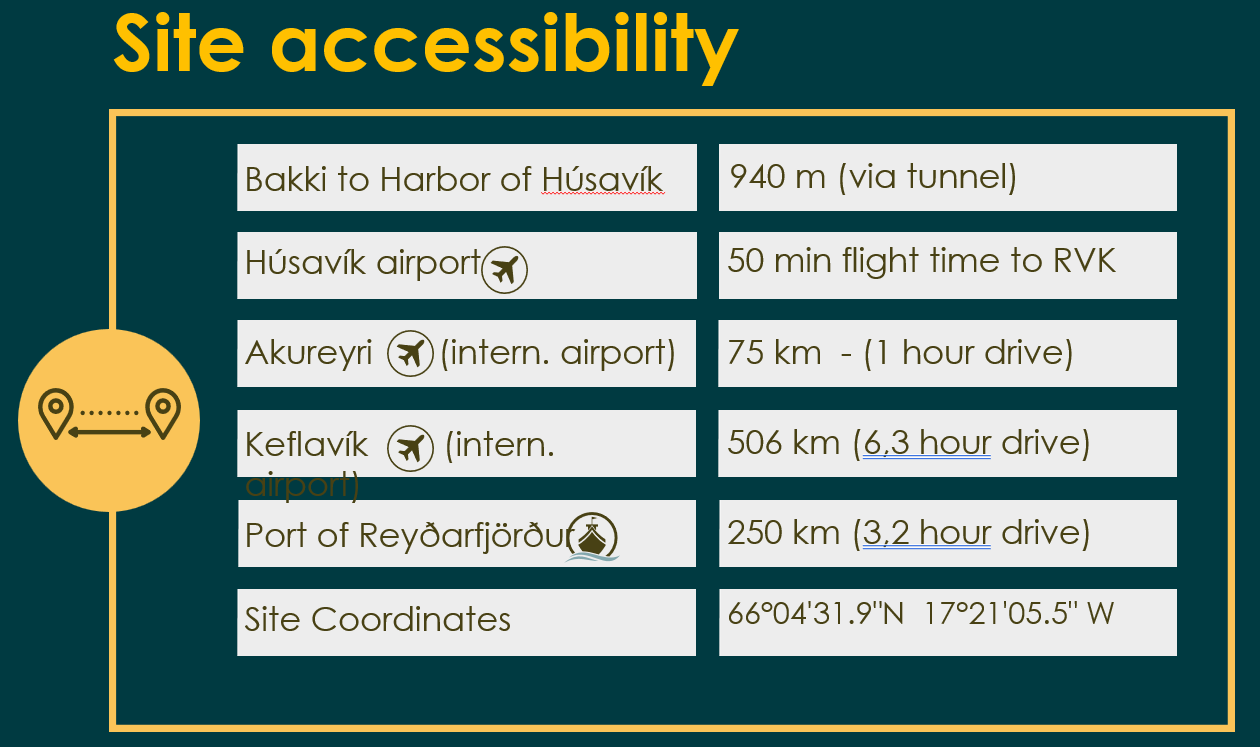
A major milestone in this infrastructure network is the Húsavíkurhöfði Tunnel, commonly known as the Bakki Tunnel. This 943‑meter, two‑lane tunnel directly connects Húsavík’s harbor to the Bakki Industrial Park. Constructed between 2015 and 2017, it is built exclusively for industrial traffic, ensuring safe, fast, and uninterrupted movement of heavy vehicles between the port and Bakki.
The tunnel dramatically enhances Bakki's logistical competitiveness by providing:
Direct, weather‑protected access between the harbor and the industrial area
Faster and safer transport for heavy freight
Reduced strain on local roads, improving safety and efficiency in the community
Long‑term infrastructure that supports multiple industries, not just a single operator
Pre zoned industrial area
In Bakki there are 200 ha zoned as an industrial areas - with certain plots already zoned, helping companies to move fast when needed.
Airport
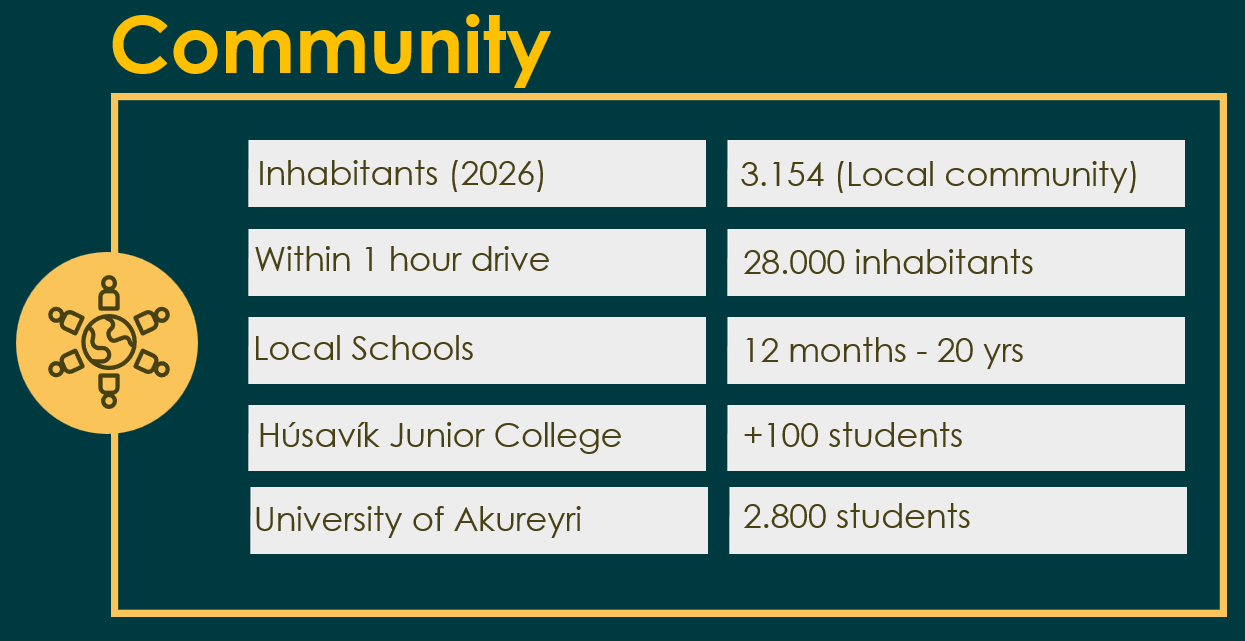
Akureyri International airport is within an hours drive from Bakki, offering multiple flights to Reykjavík every day and regular international flights.
Industrial advantages
The combination of renewable energy, geothermal water and fresh cold water gives companies at Bakki a unique competitive advantage:
- Scalable, stable & renewable energy
- Low‑cost industrial heat through direct geothermal use
- High‑temperature steam availability for energy‑intensive processes
- Abundant fresh cold water for cooling, processing, and production
- Lower operational and environmental costs, supporting strong ESG performance
- Opportunities for circular‑economy resource sharing, including heat cascading between businesses
Energy production in proximity to Bakki
Infrastructure in Húsavík
Húsavík offers a strong public infrastructure that supports both local residents and the growing industrial landscape in the region.
Healthcare Services
Húsavík is served by the Healthcare Institution of North Iceland (HSN), which operates a hospital and a comprehensive health clinic providing general medicine, nursing care, maternity and infant services, vaccinations, and school health services.
Emergency and Fire Services
The town operates a modern fire station, opened in 2020 and strategically located by the harbor for faster response and improved access for emergency vehicles. This upgrade reflects increasing demands associated with industrial expansion and tourism.
Húsavík airport
There is a small, regional airport in 10 minutes drive from Húsavík. In the past there have been regular flights between Húsavík and Reykjavík but they are currently noy operating.
The airport is an important infrastructure for ai rambulances
Infrastructure in Akureyri
Akureyri, which is an one hour drive from Húsavík, serves as the key urban and service hub of North Iceland, offering highly developed healthcare, emergency services, and educational infrastructure.
Healthcare Services
Akureyri is home to Akureyri Hospital (SAk), one of Iceland’s two specialized hospitals. It provides emergency services, intensive care, maternity care, pediatrics, psychiatric care, diagnostic imaging, and serves as a central hub for Iceland’s air ambulance system.
Education
Akureyri is a leading educational center in Iceland, home to the University of Akureyri and numerous primary and secondary schools including various vocational training.
Airport
Akureyri International Airport (AEY) plays a crucial role in the connectivity, economy, and future development of North Iceland. It serves as the regionðs primary access point for both domestic and international flights and is open year round with scgeduled flights.
There are multiple daily flights to Reykjavík and smaller regional airports. There are regular international flights to London and Manchester in the winter time.